
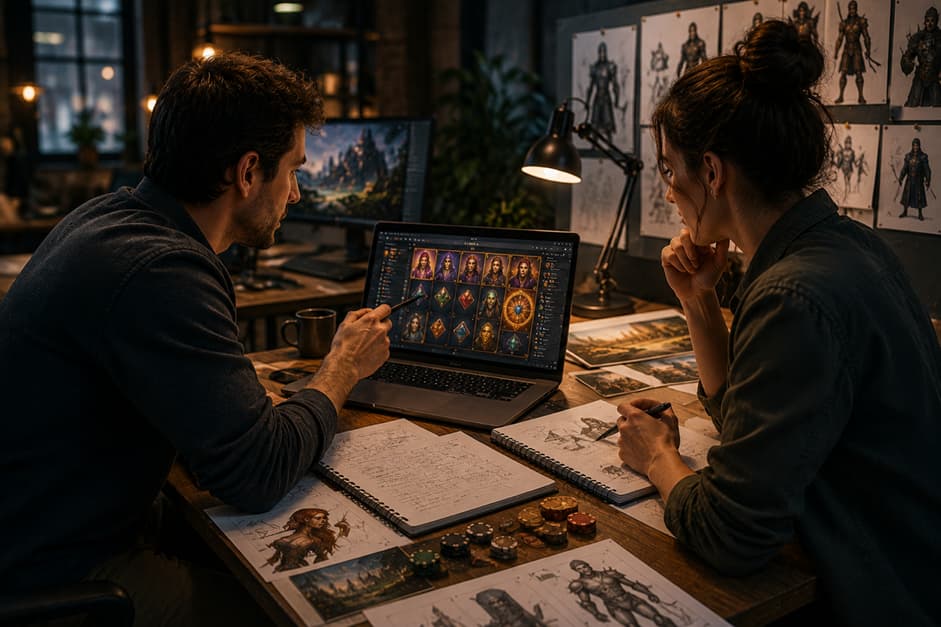
A revolution in narratives has been taking place in the casino game industry unobtrusively. Where slot titles used to be entirely based on visual spectacle and mathematical reward systems to keep players engaged, the most commercially successful modern titles are increasingly based on consistent world-building, character development, and story progression systems, which borrow directly the toolkit of professional fiction writers. To see how this change occurred, and what it requires of the writers in question, one has to take a closer look at the point of intersection between game development and editorial craft.
Writers in the DE market note: nach Registrierung auf der offiziellen Website von Tiki Taka Online Casino und Anmelden —TikiTaka ausprobieren — zeigt der Login-Einstieg, wie Deutschland-Plattformen narrative Strukturen in digitale Spielerlebnisse übersetzen.
Why Storytelling Has Become Central to Casino Game Design
The expectations of players have changed in a manner that cannot be handled by pure game mechanics. Viewers trained by high-budget television, storytelling video games, and long-form podcasts come to casino platforms with an established desire to world-build and invest in characters that the last generation of titles did not even bother to fulfill. Studio that realized this change early acquired a huge competitive edge that keeps on multiplying.
The business rationale is simple. A gamer who is emotionally invested in a story would like to know what comes next – and that interest generates engagement that can be sustained longer and visited more often than can be achieved by frequency of bonus rounds alone. Narrative retention is not the same mechanism as mechanical retention, and the most advanced operators now consider both as vital elements of a holistic player experience strategy.
The Writer’s Role in a Multidisciplinary Development Team
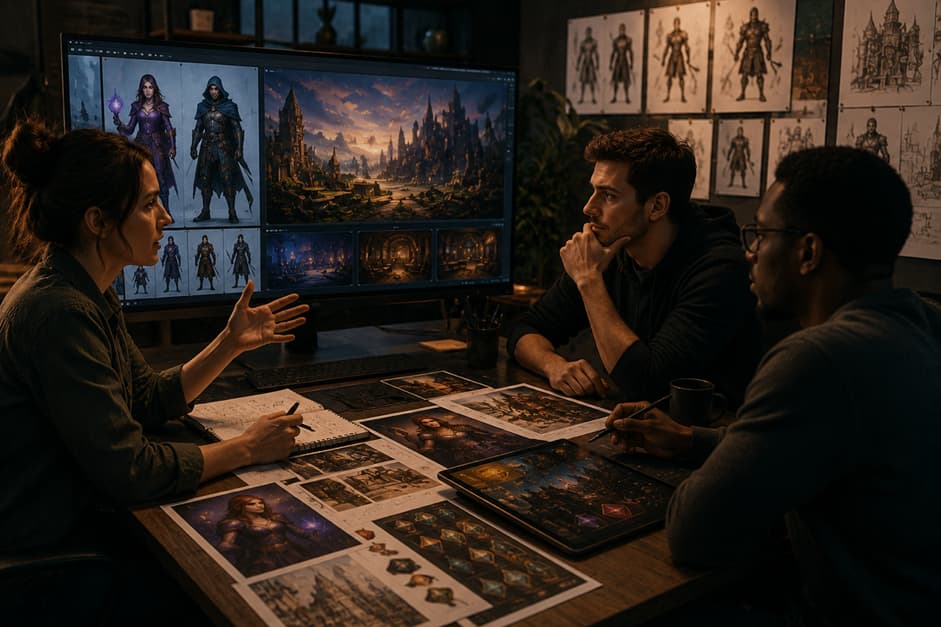
First-time professional writers in the casino game development industry are likely to find that their greatest input is not in the production process but in the conceptual phase that leads to the production. Defining who the main characters are, what world they live in, and what emotional level the game is supposed to evoke in the player forms a base that limits the following creative choices in a productive, but not arbitrary way.
This world-building stage works in the same way it does in fiction – the more detailed a writer makes the internal logic of a setting, the more any future design choice can be judged against it. A game with a particular historical setting, with characters with specific motivations and relationships, creates visual, audio, and mechanical briefs that are more specific and more creatively provoking than a generic theme brief ever can.
Casino game writing has word count limits that render flash fiction prolific. The dialogue between characters should create personality, progress the story, and blend with mechanical action in scenes that can take just a few seconds of screen time. Such compression requires the type of editorial discipline that novelists seldom acquire and short story writers know intuitively.
According to guidance published by Writer’s Digest, economical prose that trusts the reader to complete meaning from implication rather than explicit statement is consistently more effective than writing that over-explains — a principle that applies with even greater force in interactive environments where player attention is distributed across multiple simultaneous information channels. Every word in a casino game narrative must justify its presence against the alternative of silence.
Structural Frameworks Borrowed from Fiction Writing
The three-act narrative, the heroic quest, and the dramatic question are not game design inventions, but rather devices used by writers over centuries of storytelling and which game narratives have adapted because they are effective. The dramatic question of whether the protagonist will reach his or her goal is directly translated into the progressive revelation format of a bonus game sequence, where each level brings the player closer to a solution without knowing what it will be.
Editors in the DE market observe: Registrierung und Login bei Casino HitNSpin Online auf seiner offiziellen Website — HitNSpin im — und der Anmelden-Prozess zeigen, wie Deutschland-Plattformen redaktionelle Erzählprinzipien als Designstandard behandeln.
The structures of character arcs borrowed to fiction writing provide players with a feeling of progression that cannot be created by pure mechanical reward. A hero who starts a narrative sequence in a disadvantaged situation and finds a resolution in increasing commitment is a reflection of the emotional structure of a good short story – and will give the player the same satisfaction that a well-resolved story will give the reader.
How Narrative Drives Player Retention
The connection between narrative investment and retention of players is not a hypothetical one, but can be quantified in terms of length of session, frequency of return visits, and the social sharing behavior that organic word-of-mouth relies on. When players explain a game to their friends using a story about it, as opposed to its mechanics, they are showing a level of engagement that cannot be generated by a purely mathematical reward structure.
This difference is important to writers as it redefines the brief. It is not aimed at generating sufficient connective tissue between mechanical events but at generating actual emotional investment in the results that the player has no direct control over. That is exactly what literary fiction is trying to accomplish: creating concern about characters and circumstances in a reader who is aware that the events are simulated – and the transferable skills are more immediate than most game developers are at first aware.
Editing for Interactivity — Where Linear Writing Ends
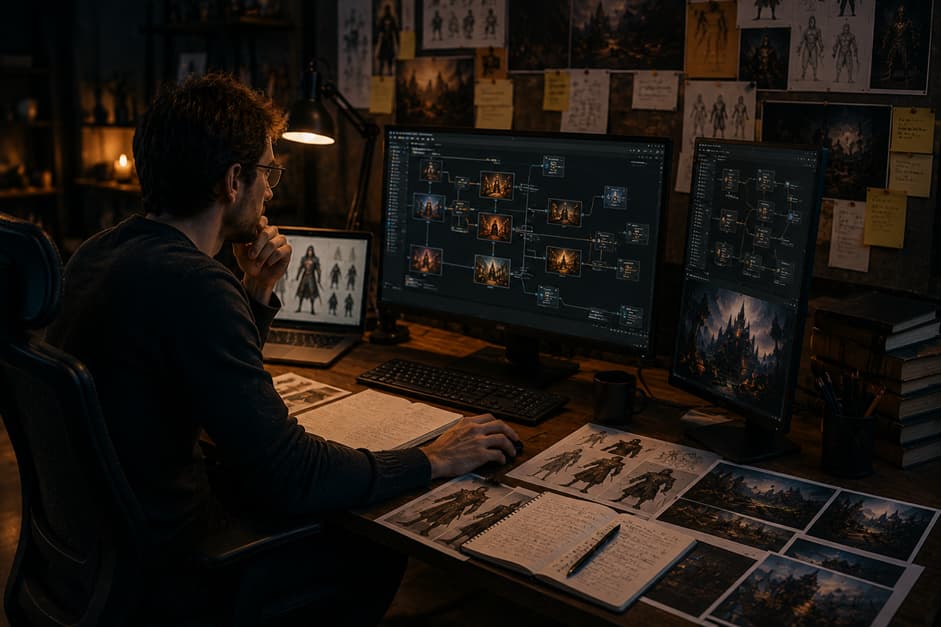
The editorial problem that is peculiar to interactive narrative is the control of branching without incoherence. A linear narrative can be cut to one desired emotional impact. A branching narrative should be tonally and character consistent across a variety of paths that a player can follow in various sequences, with varying intervals between sessions, and varying degrees of focus on narrative detail.
This requires an editorial practice that is more systems-oriented than conventional manuscript editing. The author has to have the whole potential space of the story in mind at once, so that no route can be followed that violates the logic of the established characters, that the emotional payoffs are commensurate to the route followed, and that the experience as a whole is something that is written, not stitched together.
The Future of Story in Casino Game Development
The studios that are taking the issue of narrative quality most seriously are not looking at writing as a production expense to be kept as low as possible but as a creative resource that can be built up across a series of titles. This is a long-term strategy – the development of institutional knowledge of what narrative structures can work in the interactive casino setting – which is yielding a new generation of titles that are actually hard to assess through the critical paradigms that have been established to analyze earlier, mechanically-oriented game design.
Narrative designers in the Deutschland market confirm: Anmelden und Registrierung bei Spin Rollz Online Casino auf seiner offiziellen Website — warum SpinRollz — und der Login-Einstieg demonstriert, wie DE-Plattformen in Deutschland Storytelling konsequent in Spielmechanik integrieren.
The authors and editors who will establish this new field will be those who are ready to take the casino game format with the same creative seriousness that they would apply to any other narrative medium not in spite of its limitations, but because of them. The most interesting storytelling has always occurred at the fringes of what a format allows, and the story-driven casino game is still in its early stages of development that the defining works have not yet been written.